QUESTIONS
How long until chickens lay eggs?
🌱BiologyMost backyard hens start laying between 18 and 24 weeks old (roughly 4.5 to 6 months), though the exact age swings hard depending on breed, season, and nutrition. Lightweight breeds like Leghorns can surprise you as early as 16 weeks, while heavier or ornamental breeds might make you wait until 28 weeks or more.
Typical age when hens lay their first egg
Typical case: 5 months
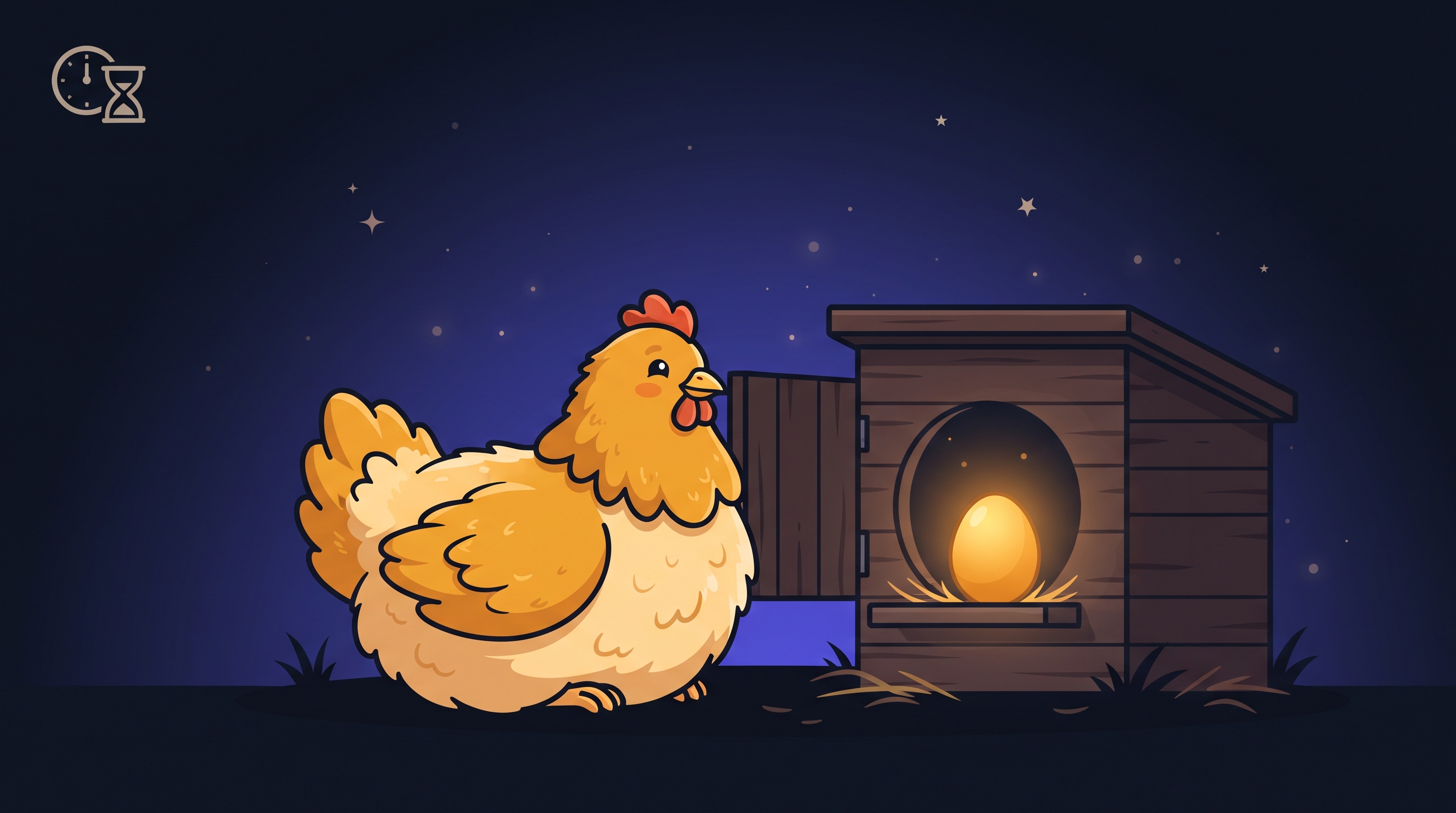
You brought home a box of fuzzy chicks, watched them turn into gawky teenage pullets, and now you're checking the coop every single morning like it's Christmas. Here's the honest timeline: most hens lay their first egg somewhere between 18 and 24 weeks of age, which puts you at about 4.5 to 6 months from hatch day. But that range isn't a guarantee, it's more like a rough forecast, because chickens don't run on a calendar. They run on hormones, daylight, body weight, and breed genetics, and those variables can push your first egg date earlier or later than the flock down the road.
By Afrod M (Msc Statistics at Makerere University)
Updated Aug 15, 2026DISCLAIMER
This article provides general, estimate-based information for educational purposes. Actual timelines can vary based on individual circumstances. It is not a substitute for professional advice specific to your situation.
ABOUT THIS ARTICLE
Researched and written by Afrod M (Msc Statistics at Makerere University), drawing on published, authoritative sources (see Sources below). This is general estimate-based information — actual timelines can vary based on your individual circumstances. Last reviewed for accuracy on August 15, 2026.
How Many Weeks Until a Chick Lays Her First Egg? (18–24 Weeks)
The short answer: 18 to 24 weeks for most standard breeds, about 4.5 to 6 months from hatch. Fast-maturing breeds like Leghorns can start as early as 16 weeks, while heavier or ornamental breeds sometimes take 28 weeks or longer. If your pullet is inside that window, eating well, and her comb is coloring up red, she's right on track.
Why the timeline isn't the same for every hen
A chicken starts laying once her reproductive system fully matures, and that maturity is triggered by a mix of age, body weight, and light exposure hitting a certain threshold all at once, not just the calendar flipping to a specific week. Two chicks hatched on the same day from the same breed can still lay a week or two apart depending on how much they've eaten, how much stress they've dealt with, and even how much daylight their coop gets. Chickens are photoperiodic, meaning their bodies respond to how many hours of light they see each day, which is exactly why so many first eggs show up in spring or summer rather than the dead of winter.
Breed matters more than almost anything else
This is the single biggest factor separating a 16-week layer from a 28-week layer. Lightweight, high-production breeds are basically bred to mature fast and lay often. Heavier, meatier, or ornamental breeds put their energy into growing bigger bodies first and laying comes later, almost like the difference between a sprinter and a bodybuilder. Bantam breeds, being naturally smaller, often mature the fastest of all since there's simply less body to build before the reproductive system can take over.
Typical age at first egg by breed type
The signs your hen is about to lay her first egg
About one to three weeks before that first egg drops, a hen usually starts broadcasting it pretty clearly if you know what to watch for. Her comb and wattles turn brighter red and noticeably bigger, which is the visible sign that her reproductive hormones have kicked into gear. She'll start squatting flat to the ground with her wings slightly out when you approach or reach toward her back, a reflex called "the squat" that's basically her body preparing for a rooster that may not even exist in your flock. She'll investigate the nesting boxes, sometimes sitting in them for long stretches days before ever laying, and her appetite will noticeably pick up since egg production burns real calories. Some hens even let out a distinctive, louder "egg song" cluck once the first one finally arrives, like they're announcing it to the whole neighborhood.
What can delay the first egg (or slow down laying later)
Nutrition is huge, a pullet needs proper grower feed with balanced protein and calcium leading up to laying age, and switching to layer feed too early or too late can throw off the timeline. Daylight matters just as much, hens generally need around 14 to 16 hours of light a day to lay consistently, which is exactly why flocks that mature going into fall or winter often stall out and don't start laying until days lengthen again in spring. Stress is another quiet culprit, a predator scare, a big move, overcrowding, or even a sudden diet change can delay laying by weeks even in a hen that's otherwise plenty old enough. And once a hen is already laying, molting, that annual feather-shedding process, will pause egg production entirely for roughly 8 to 16 weeks while her body redirects energy into growing new feathers instead.
Do you need a rooster for eggs?
No, and this trips up a lot of first-time chicken owners. Hens lay eggs on their own schedule with zero rooster involvement, the same way people ovulate regardless of anything else happening around them. A rooster is only necessary if you want fertilized eggs that could hatch into chicks. Without one, you just get the same eggs you'd buy at the store, unfertilized and perfectly fine to eat.
How long does the laying actually last?
Once she gets going, a healthy hen in her first year or two can lay anywhere from 250 to over 300 eggs annually depending on the breed, with production-focused breeds sitting at the high end and heritage or ornamental breeds landing lower. Production naturally declines after that peak, dropping noticeably by year three and continuing to taper as the hen ages, even though many hens keep laying occasionally well into their senior years, sometimes 6 to 10 years old, just at a much slower and less predictable pace. Curious about other hatching and wildlife timelines? Browse our wildlife and avian hatching guides for more.
Bottom line: mark your calendar for around the 18 to 20 week point and start peeking in the nesting boxes daily from there, but don't panic if a heavier breed or a fall hatch pushes that first egg out closer to 6 or 7 months. As long as your pullet looks healthy, is eating well, and her comb is coloring up, she's on track, she just might be running on her own version of "fashionably late."
Frequently asked questions
How old are chickens when they start laying eggs?
Most hens lay their first egg between 18 and 24 weeks old, roughly 4.5 to 6 months, though lightweight breeds can start as early as 16 weeks and heavier breeds sometimes take until 28+ weeks.
What is the fastest breed to start laying eggs?
Leghorns and other production hybrid breeds are typically the fastest, often starting around 16 to 18 weeks. Bantams also mature quickly due to their smaller body size.
Do chickens need a rooster to lay eggs?
No. Hens lay unfertilized eggs on their own regardless of whether a rooster is present. A rooster is only needed if you want the eggs to be fertilized and hatchable.
Why hasn't my chicken started laying yet even though she's old enough?
Common causes include insufficient daylight (hens need 14-16 hours), poor nutrition, stress from a recent change, or simply natural variation, some individual hens just mature a bit later than the breed average.
How can I tell my hen is about to lay her first egg?
Look for a brighter, larger red comb and wattles, squatting when you approach her, increased interest in the nesting box, and a bigger appetite, usually starting one to three weeks before the first egg.
How many eggs do chickens lay per year?
A healthy hen in her prime typically lays 250 to 300+ eggs a year depending on breed, with production breeds at the higher end and heritage or ornamental breeds laying fewer.
Why did my hen stop laying eggs?
The most common reasons are molting (which pauses laying for 8-16 weeks), shorter daylight hours in fall and winter, stress, illness, or simply natural age-related decline after 2-3 years of peak production.
Do chickens lay eggs every day?
Not exactly every day, most productive hens lay roughly every 24-26 hours, so the pattern often looks like an egg most days with occasional skipped days, especially as they age or as seasons change.
Sources: Purina — When Do Chickens Start Laying Eggs?, Tractor Supply Co. — When Do Chickens Start Laying Eggs?, The Spruce — How Long Does It Take for Chickens to Start Laying Eggs?, My Pet Chicken — When Will My Chickens Start Laying Eggs?, Cornell Cooperative Extension — Small Flock Poultry Management, Backyard Chickens — Signs a Hen Is About to Lay Her First Egg
Related reading

How many years is 1,000 days?
1,000 days is approximately 2.74 years, or about 2 years and 270 days, using an average calendar year of 365.25 days.
⏳Time
What day was 2 days ago?
As of {{today}}, 2 days ago was {{dateNDaysAgo:2}}, a {{weekdayNDaysAgo:2}}.
⏳Time
How many days are in 3 years?
There are 1,095 days in 3 years if none of them are leap years, or 1,096 days if exactly one of the three years includes a leap day (February 29).
⏳Time