QUESTIONS
How long until checks expire?
💰FinanceMost personal and business checks go "stale" after 6 months (180 days) from the date written on them but here's the twist: they don't actually die, banks just get to *choose* whether to honor them. Government checks last a full year, and cashier's/certified checks basically never expire.
Typical time before a check goes stale
Typical case: 6 months
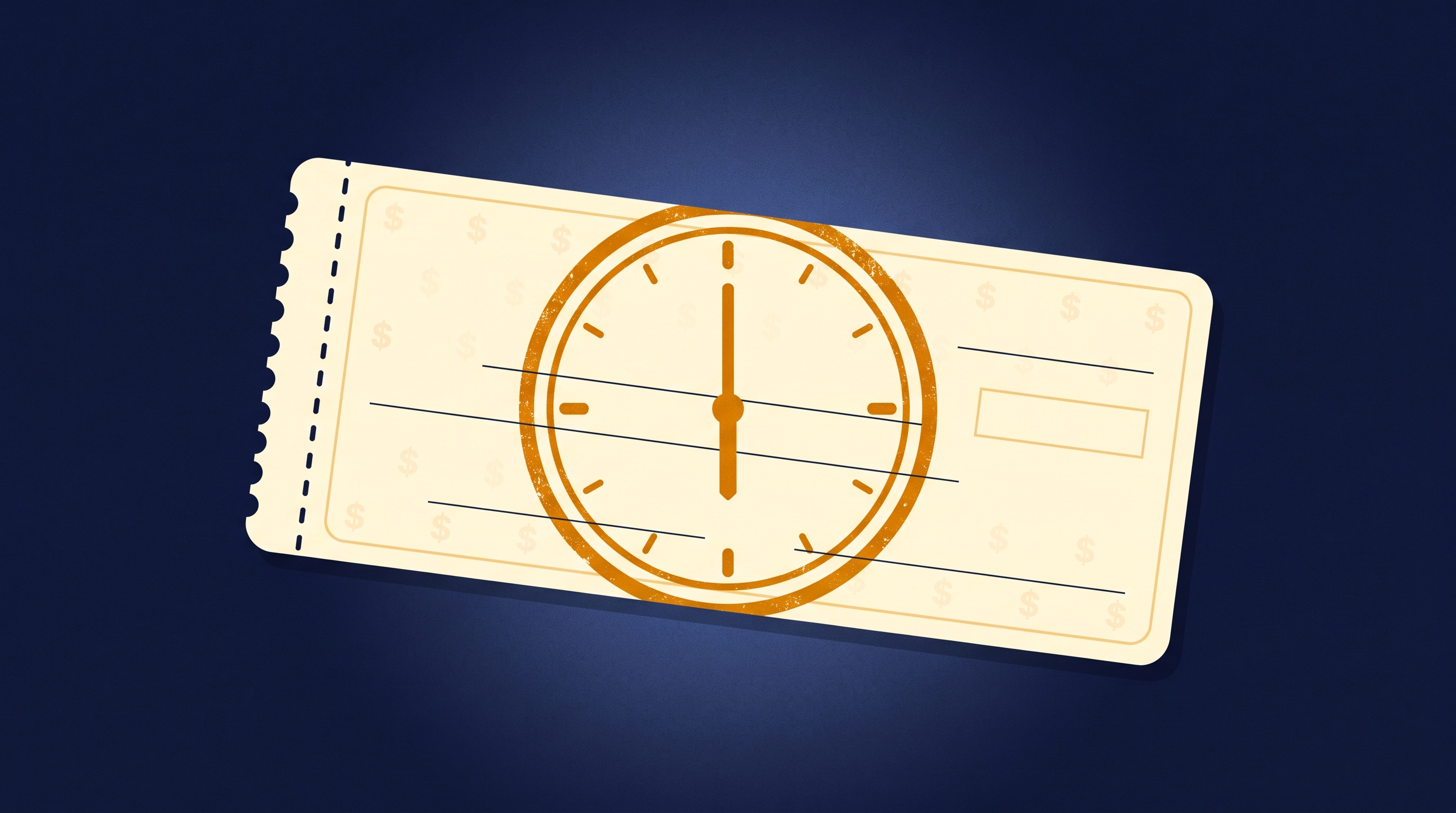
Found a check wedged in an old coat pocket, a birthday card, or the depths of your junk drawer? Before you sprint to the bank, here's the deal: most checks have a soft expiration date of 6 months from when they were written. But "expire" is doing a lot of heavy lifting in that sentence, because a stale check doesn't vanish or become worthless. It just becomes a check your bank is *allowed* to say no to. Whether they actually will is a whole different story.
By Afrod M (Msc Statistics at Makerere University)
Updated Aug 15, 2026FINANCIAL DISCLAIMER
This article is for general informational purposes only and is not financial, investment, tax, or legal advice. Figures and timelines are estimates and can vary based on your individual circumstances. Consult a licensed financial advisor or professional before making financial decisions.
ABOUT THIS ARTICLE
Researched and written by Afrod M (Msc Statistics at Makerere University), drawing on published financial and regulatory sources (see Sources below). This is general informational content, not financial or tax advice — consult a licensed financial advisor for guidance specific to your situation. Last reviewed for accuracy on August 15, 2026.
Why 6 months and not, like, forever?
The 6-month rule comes from the Uniform Commercial Code, the rulebook banks across the U.S. use to stay on the same page. It exists so people's checking accounts don't have random old checks floating around, ready to yank money out of an account months after everyone forgot about them. Think of it as a built-in "use it or lose it, kind of" timer that protects both the bank and the person who wrote the check.
The stale check plot twist: it's the bank's call
Here's what trips people up: crossing the 6-month line doesn't automatically kill the check. Legally, banks are simply not *required* to cash a check older than 180 days. That means they can still accept it if they want to, especially if it's your own bank and you have a solid history with them. Some tellers will cash a 7-month-old check without blinking. Others will bounce a check that's one day past the line. It's genuinely a coin flip, so don't assume either outcome.
How long different checks stay valid
Not all checks play by the same rules
This is where it gets interesting, because "a check" is not one universal thing. A personal check from your uncle and a U.S. Treasury refund check are basically different species. Personal and business checks: stale after 6 months, bank's discretion after that. U.S. Treasury checks (tax refunds, stimulus-style payments, federal benefits): good for a full year before they need to be reissued. State, county, or municipal checks: often shorter, sometimes stamped "void after 60 days" or "void after 90 days" right on the check, so always check the fine print. Cashier's checks and certified checks: the bank itself is on the hook for these, so under the UCC they're excluded from the 6-month stale rule entirely, though some banks print their own expiration date as an internal policy. Money orders: don't legally expire, but issuers can charge dormancy or service fees the longer they sit uncashed, so cashing them fast still saves you money.
What actually happens if you deposit a stale check
Two outcomes, no in-between: the bank processes it like normal, or it bounces back marked unpaid, sometimes with a returned-item fee attached to your account for the trouble. Neither result is guaranteed, which is exactly why it's a gamble worth skipping if you can help it. If a stale check gets returned, that's your cue to stop trying your luck and go straight to the source instead. More on Banking & Government Refunds
Got a stale check? Here's your move
Skip the guessing game and text or call whoever wrote it. Ask them to void the old one and cut you a fresh check, most people are happy to do this since an old, uncashed check is honestly a headache for them too, it keeps their bookkeeping messy and their balance looking off. If it's a check YOU wrote that never got cashed, place a stop-payment order so nobody can cash it out of nowhere later, then send a replacement. A written stop-payment order lasts 6 months before it needs renewing; a verbal one only lasts 14 days, so get it in writing if you want real protection.
Does an expired check mean the money's just... gone?
Nope, and this is the part that gives people real peace of mind. A stale check doesn't erase the debt behind it. If your landlord's check for a security deposit refund goes stale, they still owe you that money, the check was just the delivery method that expired, not the obligation itself. Legally you typically have three years after a check is dishonored (or up to ten years from the date written, whichever comes first) to pursue the money if it ever came down to that. In practice, almost nobody needs lawyers involved, a simple "hey can you reissue this" text usually does the job.
Quick reality checks (pun intended)
Postdated a check for next week and worried the bank will cash it early? They actually can, unless you've given your bank written notice of the postdate ahead of time. The 6-month clock runs from the date printed on the check, not the day you received it, so a check dated January 1st goes stale on July 1st no matter when it landed in your hands. And no, there's no such thing as a check that's "too old to even try" legally speaking, some people have successfully cashed checks years old, it's purely down to the bank's mood and policy that day.
Bottom line: don't let a check marinate. Deposit it, cash it, or mobile-deposit it the same week you get it if you can. Six months feels like forever until it isn't, and the five minutes it takes to deposit a check now beats the awkward "hey can you write me a new one" conversation later.
Frequently asked questions
How long until a personal check expires?
6 months (180 days) from the date written on it. After that it's "stale-dated" and the bank can choose to honor it or reject it.
How long until a government check expires?
U.S. Treasury checks are generally good for 1 full year. State and local government checks often expire much sooner, sometimes 60-90 days, so always check the fine print on the check itself.
Do cashier's checks or certified checks expire?
Not under the UCC, banks stay on the hook for these indefinitely. Some banks print their own expiration date as an internal policy, so it's worth checking with the issuing bank if it's been a while.
Can a bank refuse to cash a check that's 6 months old?
Yes, legally they're allowed to, but they're not required to refuse it either. It really comes down to the individual bank's policy and your relationship with them.
What happens if I deposit an expired check?
It either gets processed normally or bounces back unpaid, sometimes with a returned-item fee. There's no way to know for sure until you try, which is why it's smarter to just get a fresh check.
Do I lose the money if a check expires?
No. The debt behind the check doesn't disappear, the check was just the payment method. Contact the person or company who issued it and ask for a reissue.
Do money orders expire?
Not legally in most cases, but issuers can start charging dormancy fees the longer they go uncashed, so it still pays to cash them quickly.
Does the 6-month clock start from when I received the check or the date on it?
It's always the date written on the check, not when you got it or when you're trying to cash it.
Sources: Chase — Do Checks Expire?, Capital One — How Long Are Checks Good For?, Huntington Bank — How Long is a Check Good For?, LegalClarity — Do Checks Expire? How Long Are They Good For?, LegalClarity — When Is a Check Considered Stale Dated?, Cornell Law School — UCC 4-404: Bank Not Obliged to Pay Check More Than Six Months Old
Related reading

How many years is 1,000 days?
1,000 days is approximately 2.74 years, or about 2 years and 270 days, using an average calendar year of 365.25 days.
⏳Time
What day was 2 days ago?
As of {{today}}, 2 days ago was {{dateNDaysAgo:2}}, a {{weekdayNDaysAgo:2}}.
⏳Time
How many days are in 3 years?
There are 1,095 days in 3 years if none of them are leap years, or 1,096 days if exactly one of the three years includes a leap day (February 29).
⏳Time