QUESTIONS
How long until alcohol is out of your system?
🩺HealthYour liver clears roughly one standard drink per hour, no exceptions. Coffee, cold showers, and willpower won't speed it up, only time does.
Typical time for alcohol to clear your blood
Typical case: 4 hours
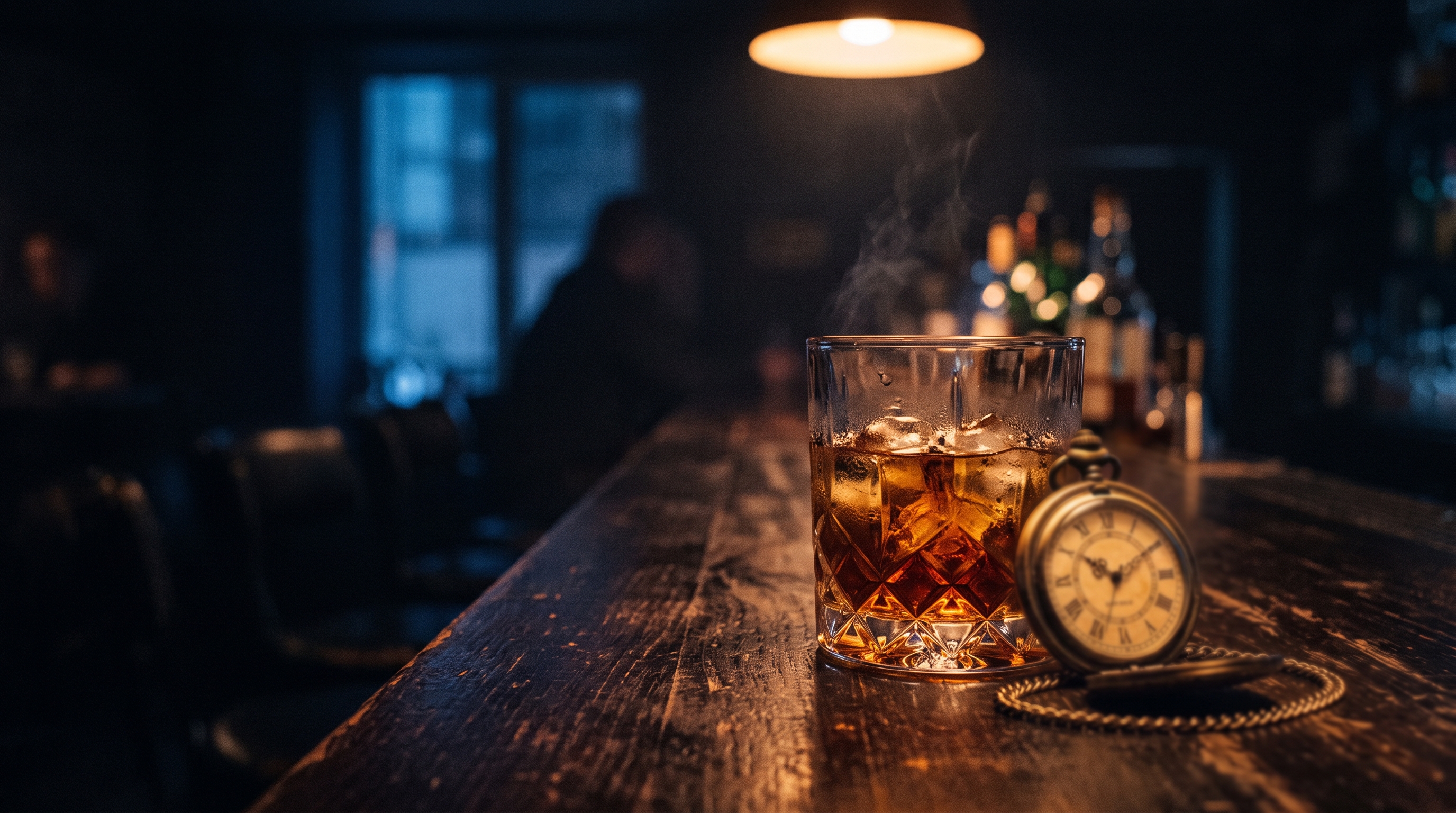
It's the morning after, you're squinting at sunlight like it personally wronged you, and you're doing that classic mental math: "if I had my last drink at midnight, and it's 9am now, am I... fine?" Here's the deal your liver never signed up to explain: it processes alcohol at a stubbornly fixed pace of about one standard drink per hour, and it does not care about your gym membership, your green smoothie, or your very compelling need to drive to brunch. Biology doesn't negotiate.
By Afrod M (Msc Statistics at Makerere University)
Updated Aug 23, 2026✓ Medically reviewed by Dr. Denis, BCh
HEALTH DISCLAIMER
This article is for general educational purposes only and is not medical advice, diagnosis, or treatment. Timelines and figures are typical ranges, not a prediction for your specific situation. Always consult a qualified healthcare provider for concerns about your health, and seek emergency care immediately if you have severe or worsening symptoms.
How long until alcohol is out of your system? (1–12 hours, typically around 4)
For most people, alcohol clears from the blood in about 1 to 12 hours depending on how much was consumed, with a typical night of drinking (2–4 drinks) fully clearing in roughly 4 hours. The math is simple because your liver's processing speed isn't: about one standard drink per hour, no matter your size, tolerance, or how badly you want it to go faster.
Your liver is basically a tiny, unbothered bouncer
About 90% of the alcohol you drink gets processed by your liver, which converts it into acetaldehyde (the stuff responsible for a chunk of your hangover misery) and then into harmless acetic acid your body just quietly disposes of. The catch: this enzyme system, mainly alcohol dehydrogenase, works at a fixed rate no matter what. Your liver isn't scaling up production because you're in a hurry, the same way one cashier doesn't suddenly clone themselves because the line got long. One drink, roughly one hour. That's the whole system, and it's remarkably indifferent to your Tuesday morning meeting.
So how long until you're actually "sober"?
Blood Alcohol Concentration (BAC) drops by about 0.015 to 0.02 percent per hour on average. A single standard drink (think: one 12oz beer, one 5oz glass of wine, or one 1.5oz shot of liquor) bumps most people's BAC up by roughly 0.02 to 0.03 percent, meaning it takes about an hour for your body to fully clear it. Stack up multiple drinks and the math stacks too, four drinks isn't "faster because your liver panics," it's just four separate hours of processing, whether you like it or not.
Time to clear alcohol from blood
"But I feel fine!" is not a scientific instrument
This is the part that ruins everyone's morning-after theory. Feeling sober and being sober are two wildly different things, your brain gets used to the sensation of being drunk and starts compensating, which is exactly why people confidently insist they're "totally fine to drive" while still very much over the legal limit. Tolerance masks the feeling, it doesn't remove the alcohol. Your liver is still doing its slow, unglamorous one-drink-per-hour shuffle in the background whether your brain has clocked it or not.
The myths that refuse to die
Coffee: makes you a more alert drunk person, not a sober one, caffeine does nothing to your BAC. Cold showers: wakes you up, does not touch your blood alcohol level in the slightest. Sweating it out at the gym: you'll just be a dehydrated person who is still over the limit, now also tired. Eating a big greasy meal before or during drinking genuinely does slow alcohol absorption into your bloodstream, so that one actually works, but it only delays the peak, it doesn't reduce the total amount your liver eventually has to process. There is no hack. There is only time.
What actually affects your personal timeline
Body weight and composition matter, more body mass generally means more fluid to dilute alcohol into, so BAC often rises more slowly in larger bodies. Biological sex plays a role too, women on average have less body water and lower levels of the enzyme that breaks down alcohol in the stomach, which is part of why the same number of drinks often hits harder and lingers longer. Food in your stomach slows absorption, so you peak later and lower rather than getting hit with everything at once. Medications, liver health, genetics, and even how fast you drank (all at once vs. spread over hours) shift your personal numbers, but the elimination rate itself, once alcohol is actually in your bloodstream, stays remarkably steady no matter who you are. If you're managing medications alongside drinking, it's worth browsing our Medications & Metabolism collection for how other substances interact with processing time.
How long alcohol shows up on a test is a totally different question
"Out of your system" for feeling normal and "out of your system" for a drug test are not the same finish line, and this trips up more people than you'd think. Breath and blood tests: alcohol is generally detectable for several hours after your last drink, roughly matching the time it takes your BAC to hit zero. Standard urine tests: usually detect alcohol for 12 to 24 hours. Advanced urine tests (EtG tests, which detect a metabolite of alcohol): can pick up drinking from up to 72-80 hours ago, which is the one that catches people off guard the most. Hair follicle tests: can detect alcohol use for up to 90 days, since it gets locked into the hair shaft as it grows. So technically, a tiny alcohol "paper trail" sticks around way longer than the buzz ever did.
Bottom line: your liver runs on its own clock, roughly one drink per hour, and no amount of coffee, willpower, or aggressive Gatorade consumption will make it clock in faster. If you're doing the math on driving, working, or anything that requires you to be genuinely sober rather than just feeling okay, give it real time, not vibes. When in doubt, the safest move is always the boring one: wait it out, or call a ride.
Frequently asked questions
How long until alcohol is fully out of your blood?
Roughly one standard drink per hour. So if you had 4 drinks, expect about 4-5 hours before your blood alcohol level reaches zero, though this varies by body weight, sex, food intake, and other factors.
Does drinking coffee or water speed up alcohol elimination?
No. Coffee and water don't change how fast your liver processes alcohol, they just make you a more hydrated, more alert person who is still over the limit.
How long does alcohol show up on a urine test?
Standard urine tests detect alcohol for 12-24 hours. Advanced EtG tests, which look for an alcohol metabolite, can detect drinking from up to 72-80 hours earlier.
How long does alcohol stay in your hair?
Hair follicle tests can detect alcohol use for up to 90 days, since alcohol metabolites get incorporated into the hair as it grows.
Can you sober up faster with exercise or a cold shower?
No. These might make you feel more awake, but they do nothing to change your actual blood alcohol concentration or how fast your liver metabolizes alcohol.
Why do women often feel more affected by the same number of drinks?
On average, women have less body water to dilute alcohol into and lower levels of a stomach enzyme that breaks down alcohol before it enters the bloodstream, so BAC tends to rise higher and clear more slowly.
Does eating food help you process alcohol faster?
Eating slows how quickly alcohol is absorbed into your bloodstream, which lowers your peak BAC, but it doesn't reduce the total amount of alcohol your liver eventually has to metabolize.
Is it safe to drive if you feel sober but recently drank?
Feeling sober isn't a reliable indicator, tolerance can mask impairment even when your BAC is still elevated. The only safe approach is to calculate based on time and drinks consumed, or simply wait it out.
Related reading
How many years is 1,000 days?
1,000 days is approximately 2.74 years, or about 2 years and 270 days, using an average calendar year of 365.25 days.
⏳Time
What day was 2 days ago?
As of {{today}}, 2 days ago was {{dateNDaysAgo:2}}, a {{weekdayNDaysAgo:2}}.
⏳Time
How many days are in 3 years?
There are 1,095 days in 3 years if none of them are leap years, or 1,096 days if exactly one of the three years includes a leap day (February 29).
⏳Time